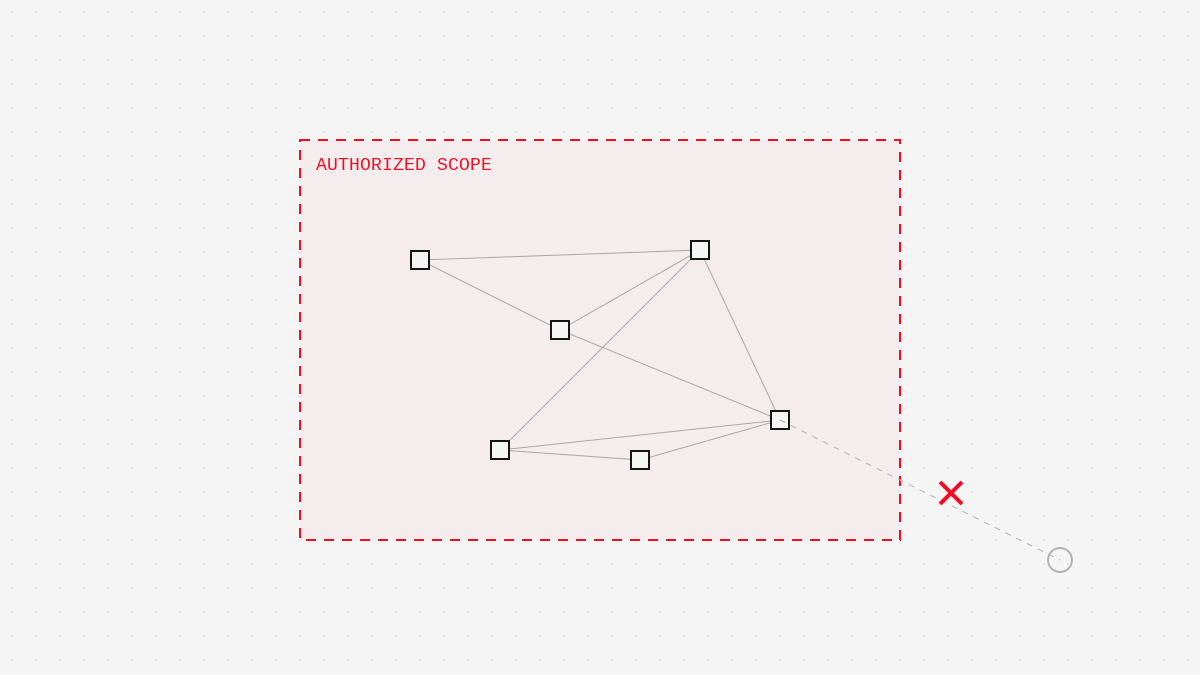
Third-party infrastructure is not yours to test
Your application runs on services you do not own. Permission from the application owner does not extend to them.
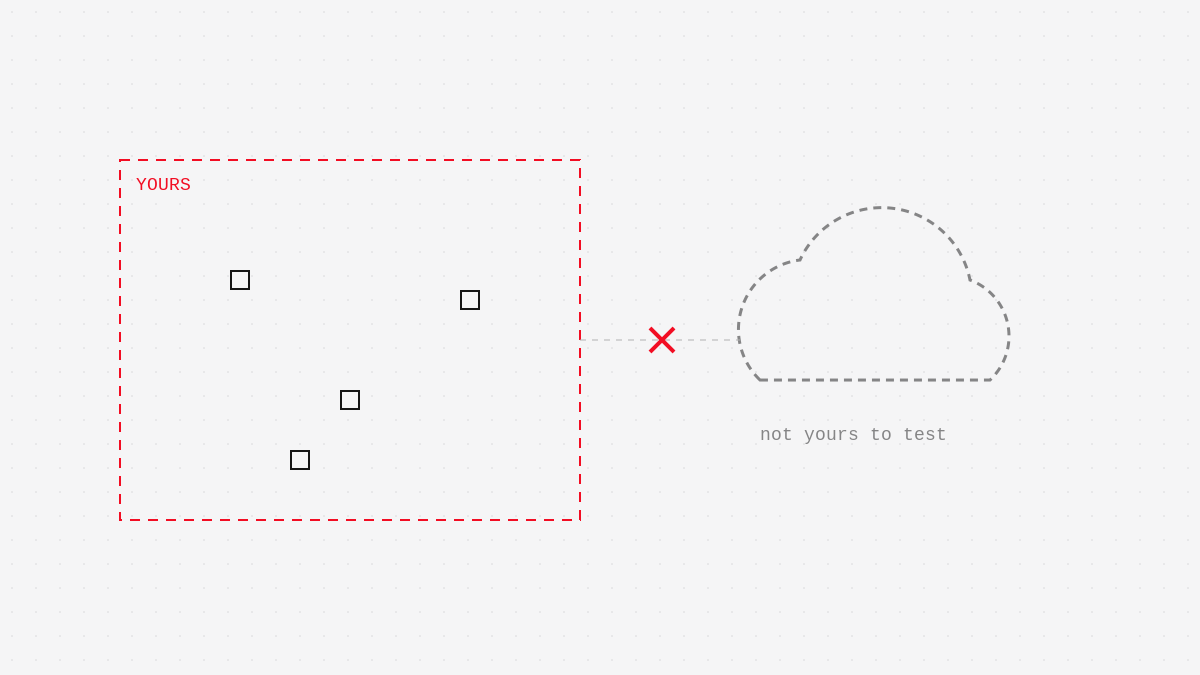
Almost no application is self-contained. It sits behind a content delivery network, sends email through a provider, signs users in with an identity service and stores files with a cloud vendor. All of those appear when you map the application, and all of them are tempting to probe.
An application owner can authorize testing of what they control. They usually cannot authorize testing of a provider's infrastructure; that permission belongs to the provider, who often publishes their own rules for security research. Shared infrastructure adds another risk: a test aimed at one tenant can affect many others.
The safe approach is to record third-party dependencies as part of the map, mark them out of scope, and leave them alone unless the provider's own policy allows testing. If a finding seems to sit in a provider's system, report it to the application owner and, through the provider's channel, to the provider.
Do not point security tools at third-party infrastructure you do not control. It is one of the simplest rules in the field, and one of the most important.